Rachel Aviv: Mother & Daughter
Mother by Joaquín Sorolla y Bastida, 1895.
Courtesy of the Sorolla MuseumRachel Aviv’s new book, You Won’t Get Free of It: Stories of Mothers and Daughters, published this week by Knopf, takes its title from a short story by Alice Munro, whom Aviv wrote about in 2024. In “The Children Stay,” Munro describes “the pain of leaving one’s children for a man,” Aviv writes, before quoting the story:
“You won’t get free of it, but you won’t die of it. You won’t feel it every minute, but you won’t spend many days without it. And you’ll learn some tricks to dull it or banish it, trying not to end up destroying what you incurred this pain to get.”
That essay, at about 20,000 words, comprises almost a third of her new book. As a staff writer for the New Yorker, Aviv spent half a year reporting on and researching Munro and her three daughters, the youngest of whom, Andrea, was sexually abused by Munro’s second husband, Gerry Fremlin, starting when she was nine years old (we speak about this below). The subjects of the book’s seven essays also include a woman named Hannah, whose dissociative disappearances open a quest for her former minister mother Barbara; another named Emma, who moved from the Philippines to the U.S., where she nannied to send money back to her daughters, and where she has remained. Following Aviv’s previous collection, Strangers to Ourselves: Unsettled Minds and the Stories that Make Us, hers is a growing body of work with a striking family resemblance.
It becomes clear, reading You Won’t Get Free of It, how the title applies to the intractable hold mothers and daughters have on one another—from the less than conscious imprints mothers leave on their daughters, to the longing daughters have to escape but never leave their mothers, to transcend yet somehow redeem them. A two-way education may develop, perhaps an insoluble conflict, sometimes an “overwhelming and exhausting fusion,” as Aviv writes in the preface, a short personal essay about her own mother and the making of the book. The choppy waters of identification, differentiation, and fraught, fierce attachment are powerful, persistent. You may not feel it every minute, but you won’t spend many days without it.
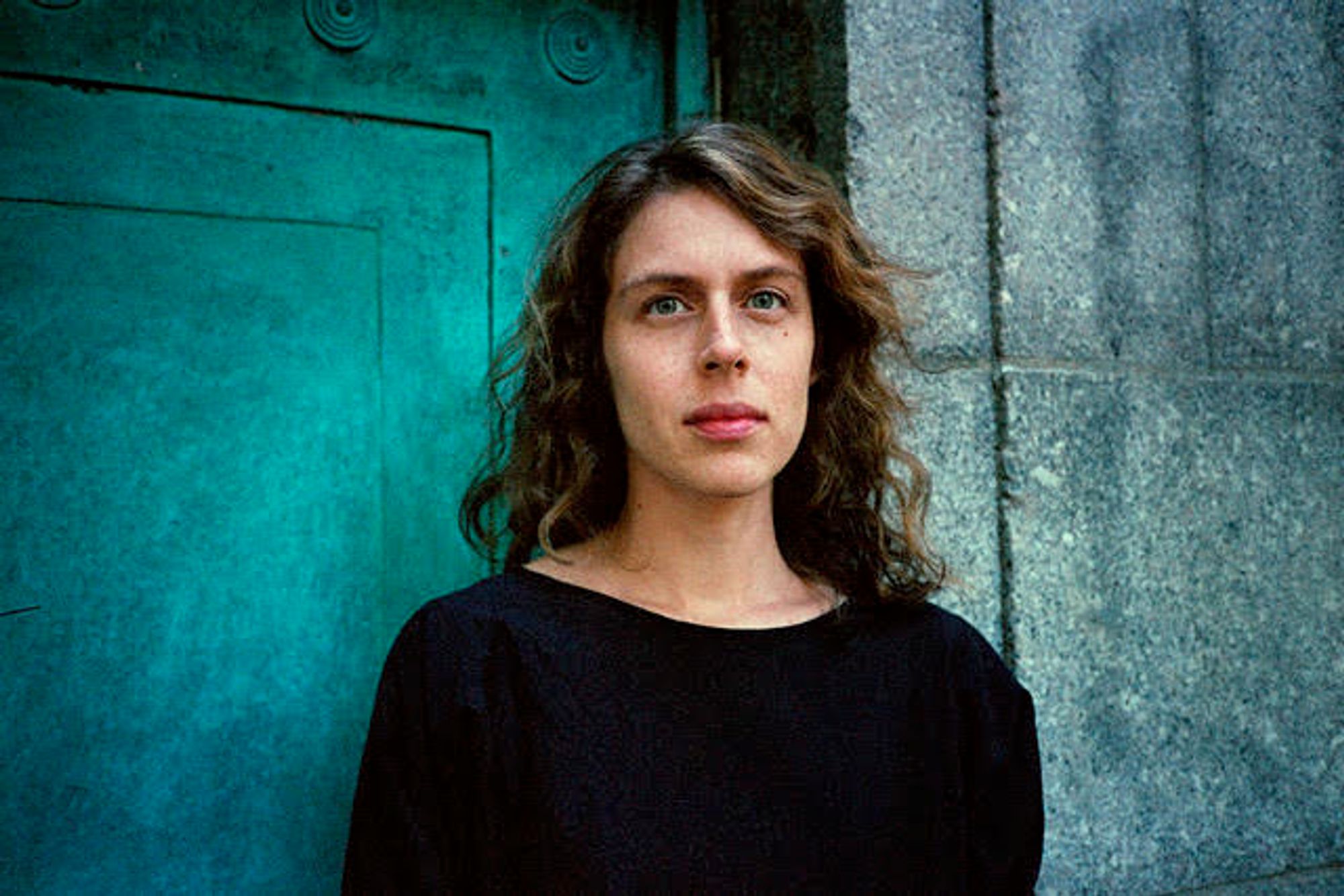
Rachel Aviv.
Photo: Rose Lichter-MarckYou’ve said that one of the central questions you were exploring in your first book, Strangers to Ourselves, is: How can a diagnosis affect someone's sense of identity? I wonder what question drove You Won’t Get Free of It.
I found myself thinking a lot about how well a parent can ever know her child, and vice versa—what remains unknowable even in the most intimate relationship. And somehow when I read Yiyun Li’s work, her line about hiding and seeking—[“the essence of growing up is to play hide and seek with one’s mother successfully”]—it crystallized a question I had been trying to articulate.
Many of the stories in the book explore memory, selfhood, and the inheritance or repetition of dynamics that play out intergenerationally in a family. What do you think makes the mother-daughter relationship a particularly potent site for exploring these things?
I think one of the reasons I’ve been drawn to writing about families is because two or more people have gone through the same set of events but are often seeing what happened from such different perspectives. There’s that sense of instability—you’re inhabiting one person’s perspective deeply and are really identifying with her and then suddenly you enter another person’s point of view and the facts can look very different. With the mother-daughter relationship, I wanted to get a better hold on how that relationship can look so different from each angle and at different moments in time.
You write in the preface about your own experience of this. Not only in your relationship to your own mother, which I want to ask you about, but you describe revisiting some of these stories, years after first reporting and writing them, now as a more experienced writer, and a mother yourself. Through new insight, and in some cases encountering details you’d previously overlooked, you decided to make some revisions. I wonder how it felt to look back on this work by a younger version of yourself.
I think I was most surprised by how one’s curiosity changes—by the moments where I realized I had failed to be curious. And where my present-day self would have identified a particular episode or trauma as foundational, I had breezed past it [back then]. It was about age, it was about being a different kind of writer, maybe. I kept noticing that I had omitted lost babies or dead babies—in three different stories. It fundamentally wasn’t registering to me as a significant life event. Those are some of the things that I felt newly attentive to, that I couldn’t just leave be. I felt I needed to address [them].
In telling the reader you decided to go back and report out some of these previously uninvestigated threads, you’re revealing in this concrete, personal way how the subjectivity of the writer frames how any story is told. This sort of look under the hood feels generous.
I’ve felt more secure over the years in acknowledging that subjectivity and just realizing—I mean, it was surprising to realize how many stories I’d even written in the first place about the [mother-daughter] dynamic. And I think that, again, speaks to subjectivity in the sense that there are reasons you choose the stories you write. What is it that makes a person feel they have the spark or authority to embark on telling a story? And that alone is a testament to one’s own desires and biases and preoccupations.
Right. There are multiple levels and stages at which the frame is narrowing and focusing.
In the preface, you write about how, when you and your sister were young, your mother frequently wrote and submitted stories to the New Yorker—she wrote fiction—and you describe your own writing developing through your relationship. You write that “adopting a restrained, objective tone felt almost like stepping away from my mom’s body heat,” and describe her feeling thwarted in her ambitions: “That my life today is the one my mom tried to have for herself is a fact so unambiguous that I have generally preferred not to allow it into awareness.” What does your mother think of the book?
People keep asking me this, and I keep telling myself, “I will ask my mom what she thinks. I just need to ask her.” And then I see her, and I don’t ask her. I would like to know how she’d put it, in her words. In general, she’s incredibly supportive. So I think that tension comes more from me, knowing how much she struggled and how much she wanted some of the things that happened in my life. It makes me feel fragile in a way. Less deserving or less secure. Even after writing this, I would prefer not to dwell in that discomfort.
One chapter tells the story of Emma, who moves to the U.S. from the Philippines to work as a nanny and send money back to her family. She plans to go back once she’s sent all her nine daughters through school, but keeps deferring her return. She forms a kind of surrogate mother-daughter relationship with a younger Filipino woman, Ivy, who’s also in the U.S. for employment. This relationship is palpably intense, as are the different dynamics with her own daughters, back in the Philippines.
Near the end of that chapter, describing Emma’s fondness for one child she nannies, as well as for the child’s young parents, who work as nurses, you write: “Nanny care is often represented as a rich mother’s indulgence, but in a country that provides few options for affordable childcare, the practice just as often represents a negotiation between two working mothers, dividing their labor between work and parenting, and rarely succeeding completely in either.”
I was curious about the trajectory of this piece—what you might have been surprised by in reporting it, and what the story ultimately came to be about for you.
Initially, I’d wanted to write about the intimate relationship between a home health aide and the person the aide is caring for during the final months of life. But I ended up connecting with people who primarily identified as nannies and not home health aides. Then, at least for the people I talked to, the prominent emotional [center] of their life was not their relationship with the person they were caring for, but the relationships they had formed, these surrogate families, with other domestic workers. So it ended up being about how these women created new families knowing they had left their loved ones at home, and how they managed. I didn’t realize how itinerant some of their lives were, in the sense that they moved through different families [as children grew and their jobs changed]. The more permanent relationships were the ones with people they were living with who felt dislocated in overlapping ways.
In a perfect world I would have gone to the Philippines and met Emma’s family. I was curious about that complicated mix of pride for her going off and being independent and making her own money, and that sense of abandonment for her children, especially as her decision to leave became increasingly permanent.
Do you have any mother-daughter cultural touchstones, whether books or films or otherwise, that you return to or that were formative for you?
Recent books I’ve read that I loved were Susie Boyt’s Loved and Missed. And Gwendolyn Riley’s writing. But as a child, I read so many stories about strong girls grieving their dead mothers. There was this whole body of YA literature about that, which I identified with and was terrified [by].
Yes, you write in the preface about your own childhood foray into the genre “as an exercise in acting out the event that I most feared and perhaps on some level secretly wished for.”
Turning to your story about Alice Munro, there was this understanding in the Munro family around the need to protect the great artist. Also, separate but perhaps related, there was this sense, especially among her daughters, of Munro as incredibly fragile, and the belief that they could destroy her if she learned what had happened to Andrea.
That was interesting, because she was so strong in so many ways. I don’t know if that’s some holdover from a certain era. They were all holding onto this earlier version of her. And maybe that’s true, your sense of yourself at age 29 persists no matter what you go on to do. I felt like that was a strange family myth, in the way that family myths don’t always correspond to the truth. [As if] anything could break her, when clearly she was incredibly steely.
But now I’m doubting my own description of her as steely. Just because she can persist in the work, and it becomes this space of strength, doesn’t mean she felt that in her inner life. I think it was probably such an attractive place to be because it was the place where she was in control. In her relationship with her husband, who was sort of a pathetic, uninteresting guy who she believed was this wonderful person, she does present herself as quite weak. Maybe there’s no reason to actually doubt that self-perception. [Maybe] the [more] mysterious thing is the strength that comes through, her persistence in writing.
I’m thinking of the daughter, feeling her power to destroy the mother, in developmental terms. Like, all young children fear at some point that they will destroy their parent, or themselves, with their own rage or other intense emotions. And then ideally, developmentally, you survive it and realize that no matter what conflict or emotion occurs, you’re not actually going to destroy Mom . . .
I don’t know. Andrea, in a way, did destroy her. Not her mother, literally, but she did have the power to do this thing that was feared by the family. It’s an interesting dynamic because I don’t know what the legacy of Alice Munro is, but the thing that everyone feared did come to pass in some way.
So often, when an artist is revealed to have done something questionable or awful in life, the focus becomes about what to do with the artist’s work. I’ve heard you reframe this question as a curiosity about how we understand what has gone into an artwork, what harm or loss or choices make something like Munro’s story “Vandals” possible. I wondered if you could speak to that reframing.
One thing I found interesting was I only had more respect for the actual writing as I reread her stories. I definitely never wanted to be writing a piece in order to cancel someone. That just didn’t feel interesting. That question of what to do with great art feels like something a lot of people have covered, and I just wasn’t that interested. But I think [I was] looking at art as this space of double living or something—the way [Munro] was able to process certain kinds of guilt and pain and sort of acknowledge and look at them in her work, but not in her life. That to me felt not just revealing of the body of work, but revealing about the way trauma works and the way sex abuse gets metabolized by families.
Another simplification maybe is the art-monster question of whether or not Munro consciously traded her daughter for art—writing these complex stories about the unruly process of not looking directly at what one knows. Because Munro had died before you wrote the piece, reading her writing was your primary source for her psychology, her own process of disavowal and integration. What was it like to immerse yourself in her mind in this way?
It wasn’t just her stories. I felt like I got access to her also through her letters and through her manuscripts (which had many drafts, with her notes on them) in her archives. And then I felt her daughters really saw her quite clearly in their descriptions of her. All three seemed to see their mother with such insight, but they [each] had different judgments about what they saw. In a way, it was like Sheila, Jenny, and Andrea were all describing the same behavior. There really wasn’t any major disagreement. It was that Andrea understood her behavior as completely destructive of her own well-being. And the other two, it took them a really long time to get to that space of seeing those same behaviors as such.
How did it seem to you that they’d changed their points of view through the decades?
I think it really took an education. Jenny described this turning point of reading a paper about the behavior of people who have been sexually abused as children, not realizing that often children will feel so overwhelmed by the power they have to destroy or not destroy the family that they become the ‘good child.’ Years later, when they want to express what was done to them, everyone’s like, “But you seemed so happy!” And I think that was a real stumbling block for the other sisters, this sense that [Andrea] seemed to be thriving, so it couldn’t have been that bad.
Did you feel you understood something crucial about Munro by the end of writing the piece?
I felt like I got a lot more access to her than you can get to most people because there were so many layers through which to understand her—her letters, her manuscripts, her published writing, and then the things that people said about her. So I didn’t leave feeling like there was some mystery that I wasn’t able to get my head around. It felt legible, I guess, to me.
Is there anything you’ve wanted to talk about regarding that story but haven’t had the chance to? It was a big part of your life and work for a time, and opened you to themes and questions you’re still exploring.
Two stories I’m working on now feel like they stemmed from [that story]. Mother-daughter relationships aside, I think I felt really aware of how the stock language around sexual abuse can often feel distancing. There was something about the way Andrea spoke about her own experience, which was so specific and granular, that helped me understand certain dynamics in a new way. She taught me a lot. It has made me think about sexual abuse more, and [about] the family dynamics surrounding it.
Sometimes that happens to me [when I meet certain people]. It definitely happened when I wrote this story for Harper's in 2009 about a woman—she was maybe in her late 20s at that point—who had been diagnosed with schizophrenia and was trying to figure out if the diagnosis was correct. And there was a way that she spoke that [opened up in my mind] a million questions about diagnosis and psychiatry, and I spent 10 years pursuing questions that had been sparked by her. I felt that way about Andrea.
How would you describe Andrea’s framing or language, and what it opened you to?
There are words people use, like “I was violated.” You know these words, you hear them, and you believe them. But then you come across someone who is able to break down every aspect of violation in new language it opens something up. And I think part of it was the relationship [between us]. Sometimes you just meet someone where there’s this feeling of trust, and you’re able to go to a place that is beyond the surface level of language.
Do you know that somebody is going to be that kind person for you from the beginning of your conversation with them, or is it only later that you realize?
I think I often do know pretty early on. I remember with the woman [diagnosed with schizophrenia] she had a Blogspot and I was like, “Oh, wow, she is describing things in a way that feels totally new to me.”
I wanted to ask about your own children, if you’re open to talking about them. I don’t know how old they are, if you want to share that, but I wondered about their relationship to your writing.
They’re 6 and 10. I think they’re intrigued. For the first time [recently] my son looked at the acknowledgments of Strangers to Ourselves to see if he was in there.
Did he find himself there?
He did. My son has read a few of my childhood journals, and I felt like that was nice because he doesn’t often think about his own interiority, and somehow I felt by reading about his mother’s interiority, at the same age he is now, he had permission to acknowledge his own.
Did he start his own journal after that?
[Laughs] He did not. He’s writing a journal for a school assignment from the perspective of a person in New Amsterdam in the 1600s, but I don’t think that counts.
So he’s going to be a novelist.
He wants to be an engineer. ♦
What is love? How is it best sought, fallen into, lived? What do we express through love, and what of lust? Longing? Who are we in love, and how does love make us? Why do we lose the ones we love, and how do we come to find we’ve lost ourselves?
What to make of this thing we flailingly, failingly call love? Falling Hard attends to the ways we come together and come apart to ask what it means to love—well and badly; romantically, platonically, familially; greedily, freely, and carelessly; unconditionally or conditions required—and to explore the questions most fundamental to love’s labors.
Subscribe to Broadcast