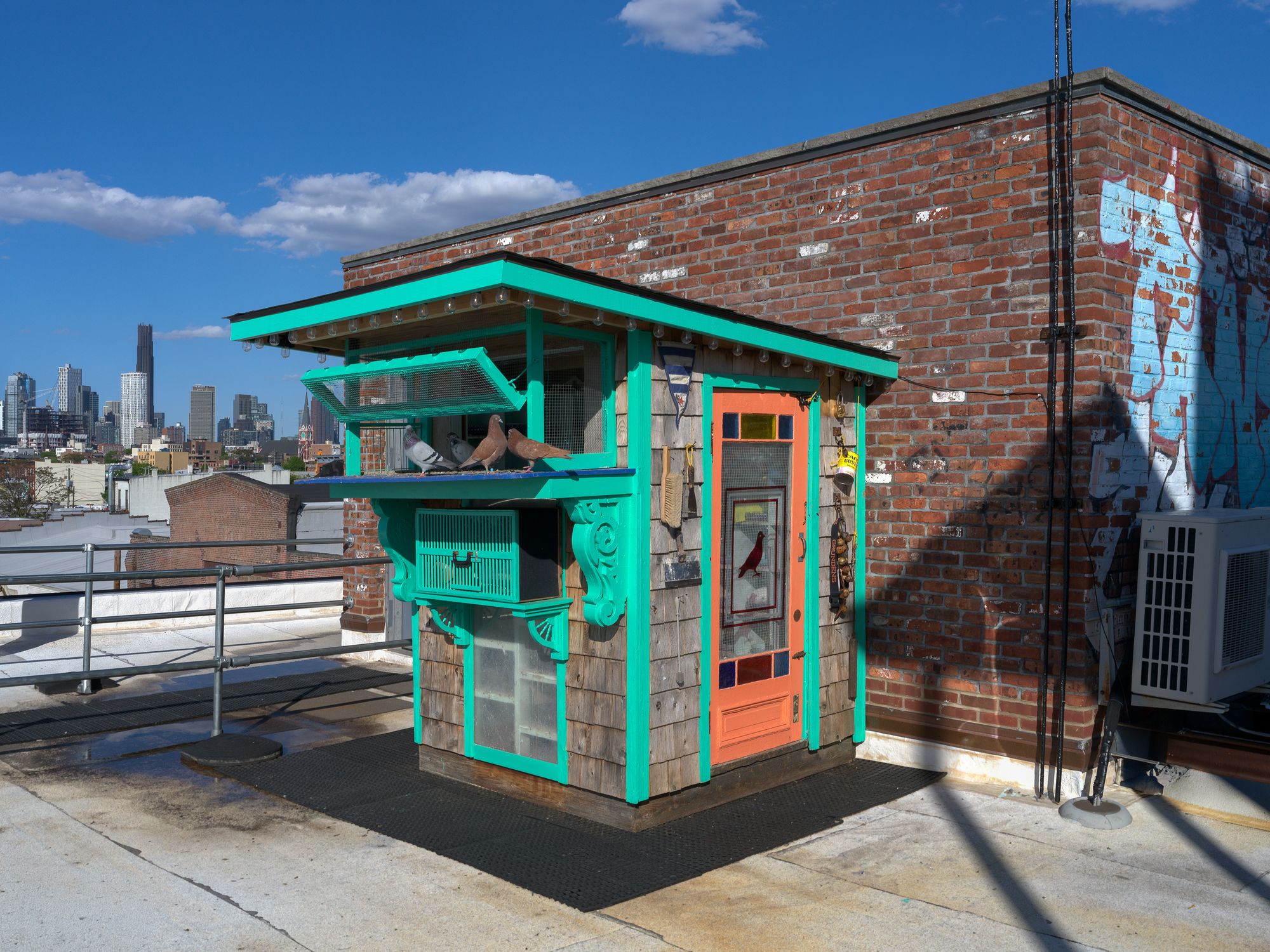
Duke Riley: Pigeoneer Works
Pigeoneer Works is a sculptural work and fully functioning pigeon coop by artist Duke Riley. An active site of daily activity, it continues Riley’s exploration of urban ecology, interspecies collaboration, and hidden histories in city life.
Drawing on Brooklyn’s deep-rooted pigeon-keeping traditions, the coop reflects a practice that, by the late nineteenth century, was widely celebrated across the borough’s working-class neighborhoods. Pigeons have long served as messengers, carrying messages across continents and paving the way for early airmail services such as New Zealand’s Great Barrier Pigeongram Service. In 1860, Paul Reuters, founder of Reuters Media, famously used forty-five pigeons to transmit stock prices and news across Europe. By the 1880s, Brooklyn had emerged as a national center for pigeon keeping. Yet by the late twentieth century, this rooftop culture had largely vanished, eroded by demographic shifts, suburban migration, and the spread of gentrification.
Riley’s rooftop coop at Pioneer Works rekindles this history, foregrounding the reciprocal relationship between humans and animals in shared urban space. Not merely a nuisance, pigeons are recontextualized in Pigeoneer Works as ambassadors of the natural world.
Frequently Asked Questions:
What do pigeons eat?
These pigeons eat a specially prepared blend of grains, peas, barley, and corn.
How long can a pigeon live?
Wild pigeons generally live 3–5 years, but domesticated and well-cared-for pigeons such as these can live 15 years or longer.
Do pigeons live alone?
Pigeons typically mate for life. They can form same-sex pairs, and lesbian or gay parents sometimes rely on surrogates to help raise their young.
Do pigeons have natural predators?
Urban pigeons face both man-made and natural threats. The coop provides safety from most predators and shelter from weather and other environmental dangers.